Friday, 26 April 2013

Earliest Mayan monuments unearthed in Guatemala

The dramatic collapse of the Mayan civilisation 1000 years ago is one of the world's enduring archaeological mysteries. But how the Maya got started in the first place is no less mysterious. Now newly discovered excavations have revealed that some Mayan ceremonial plazas and pyramids are centuries older than we thought ? but leave obscure why they were built.

Stepped pyramids and open squares ? or plazas ? were a feature of many early Mayan sites from around 800 BC. At this time, the Olmec was the major civilisation and the dominant influence in Mesoamerica. Because pyramids dating to 800 BC are also found at the key Olmec site of La Venta in what is now Mexico, many archaeologists think the Maya got their pyramid-building know-how from the Olmec.

However, new finds from an early Mayan site called Ceibal in central Guatemala suggest otherwise. Takeshi Inomata at the University of Arizona in Tuscon and his colleagues have excavated the site, and discovered a small pyramid and several large platforms ? including one that is 55 metres long and 1 metre tall ? that are unmistakeably similar to those associated with plaza-pyramid architecture at La Venta.

Carbon dating of organic samples found on the structures revealed that the small pyramid dates to around 850 BC ? just before pyramids became common at La Venta ? whereas the long platform dates to 1000 BC. This makes it 200 years older than other Mayan monuments and 200 years older than the monumental constructions at La Venta.

At the time that the Ceibal monuments were constructed, "La Venta could not have been a large, influential centre", says Inomata. So although the early Maya may have been influenced by the Olmec in some ways, it seems unlikely that they learned to build monumental architecture from them.

Who built the first pyramid?

Did the Maya independently develop their own tradition of monuments? Perhaps, but other finds in the region suggest they might still have borrowed the idea ? just not from the Olmec. There are even earlier plaza-pyramid constructions in Mesoamerica, to the southwest of Ceibal near the Pacific coast. The site of Ojo de Agua, near the Mexico-Guatemala border, did not belong to a major civilisation like the Olmec, but there are impressive structures here that are about 50 to 100 years older than any found at Ceibal.

"[Ojo de Agua] appears to be the earliest known plaza-pyramid complex," says Inomata. Other pyramids in this region might predate Ceibal too, but their ages are hazy. "We need more studies before we can determine if this was the point of origin of pyramids and associated ceremonial complexes."

Together, the evidence hints that the first Maya were influenced by people throughout Mesoamerica, and not just by the Olmec.

? and why?

One question the Ceibal finds cannot answer is why the first pyramids were built ? and why pyramids would become hallmarks of several Mesoamerican civilisations. We know, for instance, that the Olmec had lived in large prosperous settlements for hundreds of years before the era of the pyramids.

"I think an important factor was a change in the political setting," says Inomata. A driving force might have been the fall of the Olmec settlement of San Lorenzo, 100 kilometres west of La Venta, less than 100 years before the pyramids were built at Ojo de Agua. San Lorenzo had been a major influence throughout Mesoamerica, says Inomata.

"The decline of San Lorenzo created a power vacuum in which various different groups could interact in different ways and could experiment with new ideas," he says. One of those new ideas could have been pyramid construction and a new form of social order based around more standardised and communal religious practices that would have taken place in the plaza-pyramid complex.

Despite the early Mayan monuments at Ceibal, it would take several centuries for the numerous sites in the area to link up and develop into a true civilisation. "The first Maya state formed some time between 300 BC and AD 200," says Joyce Marcus at the University of Michigan in Ann Arbor. The exact process behind this rise to statehood is still unclear ? although competition between several early Mayan sites close together may have been a factor, she says.

Journal reference: Science, DOI: 10.1126/science.1234493

If you would like to reuse any content from New Scientist, either in print or online, please contact the syndication department first for permission. New Scientist does not own rights to photos, but there are a variety of licensing options available for use of articles and graphics we own the copyright to.

Have your say

Only subscribers may leave comments on this article. Please log in.

Only personal subscribers may leave comments on this article

Subscribe now to comment.

All comments should respect the New Scientist House Rules. If you think a particular comment breaks these rules then please use the "Report" link in that comment to report it to us.

If you are having a technical problem posting a comment, please contact technical support.

Source: http://feeds.newscientist.com/c/749/f/10897/s/2b2c3e59/l/0L0Snewscientist0N0Carticle0Cdn234440Eearliest0Emayan0Emonuments0Eunearthed0Ein0Eguatemala0Bhtml0Dcmpid0FRSS0QNSNS0Q20A120EGLOBAL0Qonline0Enews/story01.htm

dianna agron million hoodie march tebow trade mike the situation jacksonville jaguars jacksonville jaguars benjarvus green ellis

Did the Olympics give cycling a boost? | Latest News | Cycling Weekly

Bradley Wiggins, London 2012 time trial gold R

Bradley Wiggins, London 2012 time trial gold R

The positive effect of British cycle racing success is much trumpeted by organisations from British Cycling to Halfords, with boosts in sales and growing interest in mass participation events hinting that the UK is falling back in love with the bicycle.

However recent government statistics show that overall bicycle use across the country has remained static, bringing into question the size of the so called "Wiggo Effect" in getting more people cycling more often. Despite regional variations cycling accounts for just 2% of all journeys across the country, a figure which remained unchanged during 2012.

One of the early claims of a positive Olympic effect came from bike retailer Halfords. After struggling in May 2012 the chain apparently responsible for one in three bikes sold in the UK had a 14.7% jump in sales in the third quarter following London 2012.

Ladies' bikes designed by Victoria Pendleton - vintage style, not sporty bikes - are among its best sellers, indicating people were getting on bikes for non-competitive reasons.

Indeed the government's Ride to Work scheme also leapt in popularity after the Olympics, with a 30% increase in uptake in the third quarter of 2012 compared with 2011. Statistics also show that most of those new to the scheme hardly cycled before, including to work.

Mark Brown, Head of Ride2Work at Evans Cycles, said: "The big stat we had was of that from July to August we saw 150% increase in people joining from the same period in 2011."

He added: "90% of people who do the scheme notice health benefits; people join because they want the tax benefits but they soon realise all the health benefits and happiness. Some people start to talk about giving up their cars completely."

If more bikes are being sold then it follows that more people should be cycling. British Cycling (BC) certainly think so. Research conducted on 1000 people before and after the Olympics by the London School of Economics (LSE) on behalf of Sky and BC showed Britain's Olympic success had motivated people to cycle more, whether competitively, commuting or leisure rides.

Stewart Kellett, Director of Recreation and Partnerships at British Cycling said: "We're incredibly proud that the success of our elite athletes has been mirrored by huge numbers of people getting their bikes back out of the shed, or trying out cycling for the first time."

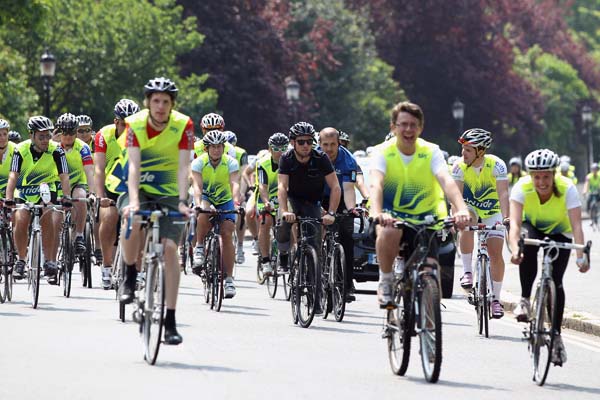
Kellett said BC events like Sky Rides, local guided rides and Breeze rides have helped get a million more people get cycling. He added: "We've provided a range of opportunities - from big city centre events like Sky Rides, through to local guided rides and our more informal Breeze rides for women that make it easy for people to get out on their bikes and enjoy themselves.

"During the Olympic fever period, June to September there was an increase in [Breeze ride] participation by 130% which was absolutely incredible for us."


Mark Cavendish leads one of British Cycling's Sky Rides

Although the LSE research suggest those re-entering cycling are more likely to do gentler family and social rides than long distance sportives, the uptake in mass participation events has been felt across the board. Event organisers UK Cycling Events reported three times as many orders between the period between December and February after the Olympics than the same period before.

The Guardian also cited the "Wiggo Effect" on a boom in cycling holidays during 2012, also predicting cycling would continue to dominate the ?active break' sector in 2013. Andrew Straw of cycling holiday company Saddle Skedaddle agreed.

"Cycling is very much on the up, and we are having our best year," he said, adding that the biggest areas of growth were the lower graded easier trips, with far more women joining Skedaddle's cycling holidays than before.

"January and February were record months for us and generally the feel it is a lot more people getting into cycling."

Culture doesn't change overnight

However, many are understandably sceptical about the potential for a single event to change the country's habits, arguing that two weeks of competition will have little impact on those who were unwilling to cycle in the first place.

As Andy Salkeld from Leicester City Council put it during the recent Parliamentary cycling inquiry, ?Get Britain Cycling': "We have spent the last 50 years building a car-centric culture, and it doesn't change overnight because we have won some Olympic gold medals."


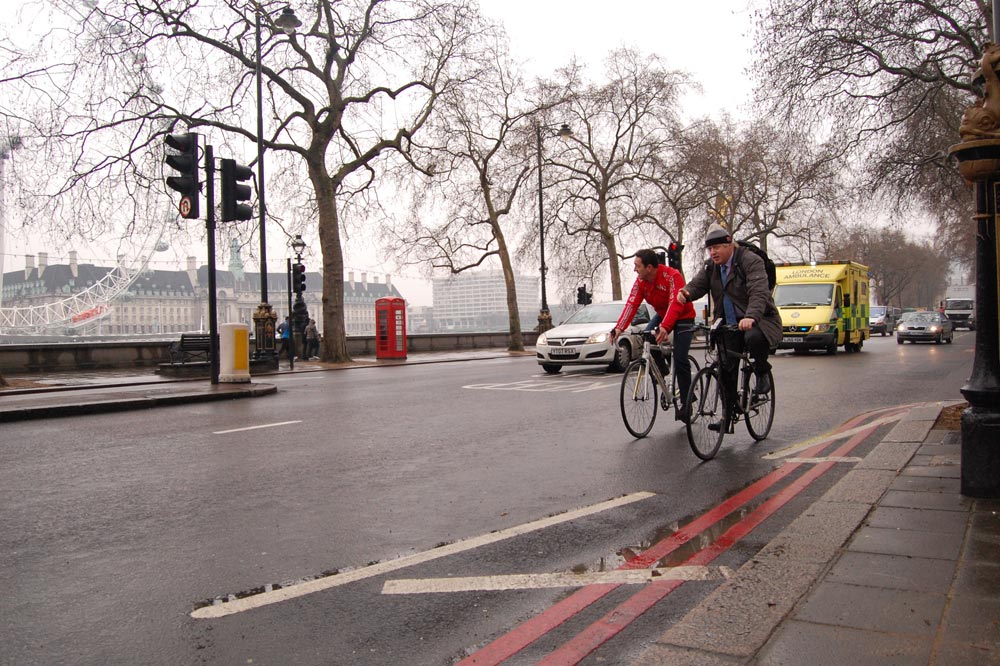
The Mayor of London (r) riding with gold medalist turned cycling campaigner, Chris Boardman

Speaking to Cycling Weekly last year, Mikael Colville Anderson of the Copenhagenize cycling consultancy observed of the UK: "A whole generation grew up with an impression of cycling as a sport or a recreation and nothing else - or something kids learned in the driveway then stopped."

Sport certainly won't change that impression alone, and the ability of mass participation events like the Sky ride to change people's long terms habit is unknown. Indeed the latest government figures suggest the Olympic effect might not be as significant as that paraded by retailers and event organisers.

Certainly introducing people to cycling while handing out hi-vis tabards (which many would argue implies cycling is inherently dangerous) on streets that are often traffic-free could mean some events are an artificial, albeit fun experience. In short, a nice day out but cars rule the roads for the other 364 days of the year.

Colville Anderson identified some parallels between the UK's experience and what happened in Denmark following Bjarne Riis' 1996 Tour de France: Danish cycle holidays increased 30% after Riis became the first Dane to win the Tour (although he later confessed to having done it with the help of doping).

However he argued that in Denmark the effect is in reverse. "It's the opposite way around [to the so called Wiggo or Olympic effect]," he said, noting that small countries like Denmark and the Netherlands have more professional racers - and win far more medals - than their size would suggest.

"The more people there are out riding their bikes every day, the more will then filter down into the cycling clubs," he explained.

Squandering the Olympic legacy?

If the "Wiggo Effect" is not as straight forward as it seems, what is needed to make sure that the active travel legacy of the Olympic Games is both positive and sustained?

"It [the government figures] should act as a prompt to the Government that they cannot sit back and wait for cycling to increase, they need to take action to promote it," Chris Peck of the CTC said about the latest government figures. "Investment is one of the mainstays if you want to get more people cycling."

Speaking to The Times, Julian Huppert, the MP for Cambridge, said, "this is a figure that we need urgently to work on and get more people cycling. We need to demonstrate to people that it is a safe, efficient, cheap and healthy thing to do. Government has a critical role in doing this in terms of leadership, funding and providing a vision."

Increased and consistent funding from central government was one of the key elements called for in the "Get Britain Cycling" report published on April 24 after a parliamentary inquiry of the same name. "Squandering the Olympic legacy and failing to create a healthier, more active UK," is a major concern, it adds.

Although months in the making, London got a groundbreaking new cycling plan with real ambition from Boris Johnson and his new cycling commissioner, Andrew Gilligan, in March. ?931 million has been pledged over ten years.

Cycling commitment from UK councils continues to be a mixed bag and transport minister Norman Baker, as he announced details of a ?62 million investment in cycling, told the Guardian he couldn't see the UK becoming like the Netherlands.

That public support is also growing is not in doubt, with high profile endorsement from Chris Boardman to The Times adding to the nation's enthusiasm.

What is needed now is the level of political ambition shown in London to make cycling for everyone, as it is on the continent, and as it should be.

Related links
Consistent funding required to increase cycling in the UK
Remove barriers to "Get Britain Cycling," say MPs in new report

Source: http://www.cyclingweekly.co.uk/news/latest/538092/did-the-olympics-give-cycling-a-boost.html

audacious pollen count mexico city mexico earthquake aziz ansari aziz ansari katherine jenkins

Saturday, 20 April 2013

Conservatives gear up for immigration fight

By Caren Bohan

WASHINGTON (Reuters) - As a bipartisan Senate group worked over the past few months to assemble broad legislation to overhaul the U.S. immigration system, conservative critics of the effort kept a fairly low profile. That's about to change.

Critics of the bipartisan "Gang of Eight" immigration bill are gearing up for an intense fight to defeat the bill and they plan to put the economy at the center of their strategy.

The debate on Capitol Hill over the bill will kick off Friday with a hearing in the Senate Judiciary Committee. Conservatives held back until details of the legislation emerged and now intend to stir grassroots opposition through social media and talk radio among other lobbying efforts.

"Everything in this bill says we have a labor shortage. It's proposing adding millions more foreign workers over the next decade alone," said Roy Beck, head of NumbersUSA, a group that favors low immigration levels. "We have 20 million Americans who can't find a full-time job. It's as if the Gang of Eight lives in alternate universe."

Beck took aim at a provision that would allow many of the roughly 11 million undocumented immigrants to obtain provisional visas, giving them the right to live and work in the country for 13 years before becoming eligible for citizenship.

Many foes of the immigration bill view their most effective line of attack to be warnings about the costs of the legislation and its impact on an already weak U.S. labor market.

Some activists and lawmakers have derided the bill as an amnesty for lawbreakers but by emphasizing the law enforcement argument, conservatives risk fueling a perception that they are anti-immigrant.

Republicans are also mindful of their party's low standing with Hispanic Americans and wary of stirring backlash with these voters.

The bill would establish new guest worker programs of low-skilled workers in farming, construction and other trades and increase the number of skilled workers who can obtain visas.

Former South Carolina Senator Jim DeMint, who now heads the conservative Heritage Foundation think tank, attacked the bill as "amnesty," adding that it would incur "significant costs" to taxpayers.

"At a time of trillion-dollar deficits and $17 trillion in debt, the cost of implementing amnesty and the strain it will add to already fragile entitlement and welfare programs should be of serious concern for everyone," DeMint said in a blog post on the Heritage Foundation web site.

The four Democrats and four Republicans who sponsored the bill formally began their effort to sell it at a news conference Thursday.

Under the Gang of Eight proposal, those who obtain provisional visas would not be eligible for most federal benefit programs, including welfare and assistance purchasing health insurance under the 2010 health reform law, until they receive green cards or citizenship.

But those given provisional legal status would eventually be allowed to draw benefits once they receive green cards or citizenship.

FISCAL IMPACT DEBATED

Heritage, which helped defeat the last major effort at comprehensive immigration reform in 2007, plans to issue a study in coming weeks analyzing the fiscal impact of the Gang of Eight's proposal in a report likely to become fodder for the debate on Capitol Hill.

Within conservative circles, the politics of the immigration issue are complicated. Republican Senator Marco Rubio, a Cuban-American and a favorite of the conservative Tea Party movement, is one of the lead sponsors of the Senate immigration bill.

Rubio, a Florida Republican and potential presidential candidate in 2016, and some other Republicans are embracing immigration reform in the aftermath of a presidential election in which Republican Mitt Romney lost to Democratic President Barack Obama, hurt in part by Obama's huge advantage with Latino voters.

Romney's stance on immigration during the campaign, including suggesting that illegal immigrants "self-deport," helped to cost him votes with Hispanic Americans.

Some prominent economic conservatives, including anti-tax activist Grover Norquist, support the immigration reform bill, arguing that it will boost growth by making labor markets more fluid and giving technology companies and other business greater leeway to hire the skilled workers they need to stay competitive.

Douglas Holtz-Eakin, a former aide to President George W. Bush who also advised McCain's failed 2008 presidential bid, has estimated that immigration reform could boost U.S. gross domestic product by a nearly a percentage point.

Holtz-Eakin, head of the American Action Forum, a conservative policy institute, also said overhauling immigration laws could reduce cumulative federal budget deficits by $2.5 billion when taking into account the fact that faster economic growth leads to higher tax collections and reduces costs for unemployment insurance and other safety net programs.

But there are plenty of Republican skeptics of the immigration bill on Capitol Hill and it faces a particularly tough road in the Republican-controlled House of Representatives.

In the Senate, which is narrowly controlled by Democrats, Republican Jeff Sessions is expected to lead the effort to defeat the immigration bill. Like DeMint, Sessions said the bill would put a huge strain on federal entitlement programs. He also warned it would exacerbate a scarcity of jobs for Americans already grappling with a 7.6 percent unemployment rate.

"This proposal would economically devastate low-income American citizens and current legal immigrants," the Alabama Republican senator said. "It will pull down their wages and reduce their job prospects. Including those legalized, this bill would result in at least 30 million new foreign workers over a 10-year period ? more than the entire population of the state of Texas."

(Reporting by Caren Bohan; Editing by Cynthia Osterman)

Source: http://news.yahoo.com/conservatives-aim-defeat-immigration-bill-stressing-economy-160432309.html

alicia silverstone park slope food coop anchorman sequel safety not guaranteed lifehouse al gore la dodgers

Monday, 1 April 2013

'G.I. Joe: Retaliation' Offers Easter Eggs For Die-Hard Fans

The franchise's latest installment managed to work in a few nods to the classic Joe cartoons and comics between explosions.
By Brett White


Dwayne Johnson in "G.I. Joe: Retaliation"
Photo: Paramount

Source: http://www.mtv.com/news/articles/1704645/gi-joe-retaliation-easter-eggs.jhtml

Espn College Football Eddie Murphy died Suzanne Barr Clint Eastwood speech Maria Montessori clint eastwood Julian Castro

April Fools! Stars Making Funny Faces

See the celebrities whose goofy faces are a perfect fit for April Fool's Day!

Source: http://www.ivillage.com/celebrities-making-funny-faces/1-b-395955?dst=iv%3AiVillage%3Acelebrities-making-funny-faces-395955

kate upton sports illustrated outback chaka khan taylor swift safe and sound delilah nevis 2012 sports illustrated swimsuit

Kuwait PM says two Kuwaitis among 94 accused in UAE plot trial

RIYADH (Reuters) - Two Kuwaiti citizens are among 94 suspected Muslim Brotherhood members on trial in the United Arab Emirates accused of planning to overthrow the state, Kuwait's prime minister said.

The two are "suspected of involvement in financing this cell", Sheikh Jaber al-Mubarak al-Sabah said in an interview published by pan-Arab daily Asharaq al-Awsat on Saturday.

The UAE's attorney general was quoted in January as saying the group was linked to Egypt's Muslim Brotherhood and had sought to infiltrate state institutions with the aim of seizing power. The trial started early this month.

The Muslim Brotherhood is not banned in Kuwait, which has the most open political system in the Gulf, and several opposition politicians are openly affiliated with the group. Political parties are still barred in the country.

The UAE has avoided the unrest that has unseated autocratic Arab rulers elsewhere in the past two years. It has a state-sponsored cradle-to-grave welfare system and has come down hard on any sign of political dissent.

Kuwait and the UAE are both members of the Gulf Cooperation Council, a six-member group of close Gulf Arab allies that also includes Saudi Arabia, Bahrain, Qatar and Oman.

(Reporting by Angus McDowall; editing by Andrew Roche)

Source: http://news.yahoo.com/kuwait-pm-says-two-kuwaitis-among-94-accused-090550467.html

erika van pelt pat robertson hunger games trailer hunger games trailer in plain sight hunger games movie review bats

Rubio: Reports of immigration deal 'premature'

WASHINGTON (AP) ? Even with one of the largest hurdles to an immigration overhaul overcome, optimistic lawmakers on Sunday cautioned they had not finished work on a bill that would provide a path to citizenship for 11 million illegal immigrants.

The AFL-CIO and the pro-business U.S. Chamber of Commerce reached a deal late Friday that would allow tens of thousands of low-skill workers into the country to fill jobs in construction, restaurants and hotels. Yet despite the unusual agreement between the two powerful lobbying groups, lawmakers from both parties conceded that the negotiations were not finished.

"With the agreement between business and labor, every major policy issue has been resolved," said Sen. Chuck Schumer, the New York Democrat who brokered the labor-business deal.

But it hasn't taken the form of a bill and the eight senators searching for a compromise haven't met about the potential breakthrough.

"We haven't signed off," said Sen. Lindsey Graham, R-S.C.

"There are a few details yet. But conceptually, we have an agreement between business and labor, between ourselves that has to be drafted," he added.

Yet just before lawmakers began appearing on Sunday shows, Sen. Marco Rubio warned he was not ready to lend his name ? and political clout ? to such a deal without hashing out the details.

"Reports that the bipartisan group of eight senators have agreed on a legislative proposal are premature," said Rubio, a Florida Republican who is among the lawmakers working on legislation.

Rubio, a Cuban-American who is weighing a presidential bid in 2016, is a leading figure inside his party. Lawmakers will be closely watching any deal for his approval and his skepticism about the process did little to encourage optimism.

Rubio, who is the group's emissary to conservatives, called the agreement "a starting point" but said 92 senators from 43 states haven't yet been involved in the process.

The detente between the nation's leading labor federation and the powerful business lobbying group still needs senators' approval, including a nod from Sen. John McCain, the Arizona Republican whose previous efforts came up short.

"I think we're on track. . But as Sen. Rubio correctly says, we have said we will not come to final agreement till we look at all of the legislative language and he's correctly pointing out that that language hasn't been fully drafted," Schumer said.

Sen. Jeff Flake, R-Ariz., also noted the significance of the truce between labor and business but added that this wasn't yet complete.

"That doesn't mean we've crossed every 'i' or dotted every 't,' or vice versa," said Flake, who is among the eight lawmakers working on the deal.

Schumer negotiated the deal between AFL-CIO president Richard Trumka and Chamber of Commerce head Tom Donohue during a late-Friday phone call. Under the compromise, the government would create a new "W'' visa for low-skill workers who would earn wages paid to Americans or the prevailing wages for the industry they're working in, whichever is higher. The Labor Department would determine prevailing wage based on customary rates in specific localities, so that it would vary from city to city.

The proposed measure would secure the border, crack down on employers, improve legal immigration and create a 13-year pathway to citizenship for the millions of illegal immigrants already here.

It's a major second-term priority of President Barack Obama's and would usher in the most dramatic changes to the faltering U.S. immigration system in more than two decades.

"This is a legacy item for him. There is no doubt in my mind that he wants to pass comprehensive immigration reform," said David Axelrod, a longtime political confidant of Obama.

During the last week, an immigration deal seemed doomed. But the breakthrough late Friday restarted the talks.

Ultimately the new "W'' visa program would be capped at 200,000 workers a year, but the number of visas would fluctuate, depending on unemployment rates, job openings, employer demand and data collected by a new federal bureau being pushed by labor groups as an objective monitor of the market, according to an official involved with the talks who also spoke on condition of anonymity ahead of a formal announcement.

A "safety valve" would allow employers to exceed the cap, the official said, if they could show need and pay premium wages, but any additional workers brought in would be subtracted from the next year's cap.

The workers could move from employer to employer and would be able to petition for permanent residency and ultimately seek U.S. citizenship. Neither is possible for temporary workers now.

"As to the 11 million (illegal immigrants), they'll have a pathway to citizenship, but it will be earned, it will be long, and it will be hard, and I think it is fair," Graham said.

The new program would fill needs employers say they have that are not currently met by U.S. immigration programs. Most industries don't have a good way to hire a steady supply of foreign workers because there's one temporary visa program for low-wage nonagricultural workers but it's capped at 66,000 visas per year and is only supposed to be used for seasonal or temporary jobs.

Separately, the new immigration bill also is expected to offer many more visas for high-tech workers, new visas for agriculture workers, and provisions allowing some agriculture workers already in the U.S. a speedier path to citizenship than that provided to other illegal immigrants, in an effort to create a stable agricultural workforce.

Schumer, Flake and Axelrod appeared on NBC's "Meet the Press." Graham was interviewed on CNN's "State of the Union."

___

Associated Press writer Erica Werner contributed to this report.

Source: http://news.yahoo.com/rubio-reports-immigration-deal-premature-144123665--politics.html

Newtown Shooting Gangnam Style Ryan Lanza Sandy Hook kanye west Univision josh hamilton